Izabela Czartoryska – “official” biography
- czytamszeptem
- Aug 17, 2025
- 2 min read
Izabela, originally Elżbieta Dorota Czartoryska, née von Flemming, was born on March 31, 1745, in Warsaw to Jerzy Detloff Flemming, Grand Treasurer of Lithuania, and Antonina Czartoryska. Her mother died during childbirth, and Izabela was raised by her grandmother, Eleonora von Waldstein Czartoryska. The girl initially lived in Warsaw, later in Wołczyn near Brest, which, as historians emphasize, deprived her of a deeper education.
At the age of 15, she married her cousin, Prince Adam Kazimierz Czartoryski, a prominent intellectual and politician. The marriage had a political character and was not without its personal difficulties.
She had six children:
Teresa Czartoryska (1765 – 1780)
Maria Anna Czartoryska, later Duchess of Württemberg (1768 – 1854)
Adam Jerzy Czartoryski (1770 – 1861)
Konstanty Adam Czartoryski (1773 – 1860)
Zofia Czartoryska, later Duchess Zamoyska (1778 – 1837)
Gabriela Czartoryska (the girl died shortly after birth in 1780)
Over time, Izabela became a central figure in Warsaw salons: she enchanted people with her elegance, intelligence and grace and aroused admiration among her contemporaries.
Patron and founder of the first Polish museum
After the partitions of Poland and the loss of independence, Izabela transformed her residence in Puławy into a center of cultural life and national remembrance.
In 1796 she began rebuilding the palace and gardens according to the designs of Piotr Aigner, turning them into the “Polish Athens”.
In 1801, she opened the "Sybil Temple"—the first museum of national memorabilia, whose motto was "The Past of the Future." The collection included works of art, historical relics, and objects of European culture, complemented by the Gothic House—a center of visual education and collective memory.
Patriot
Izabela Czartoryska was deeply involved in the political upheavals of her time—she supported the Patriotic Party and was close to the circle of the Four-Year Sejm. Her residence in Puławy was looted by Russian troops in 1794 as punishment for the family's ties to the independence movement. After the collapse of the Polish Commonwealth, she became actively involved in preserving Polish cultural heritage.
writer
She was the author of memoirs and writings of a moral and patriotic nature. Her literary and collecting activities aimed to shape national consciousness during the difficult period of partition.
Last years and legacy
After the failure of the November Uprising of 1831, she was forced to leave Puławy; part of the collections was hidden, part was saved and brought to Kraków, where the Czartoryski Museum was eventually established.
She died on June 17, 1835 in Wysock.
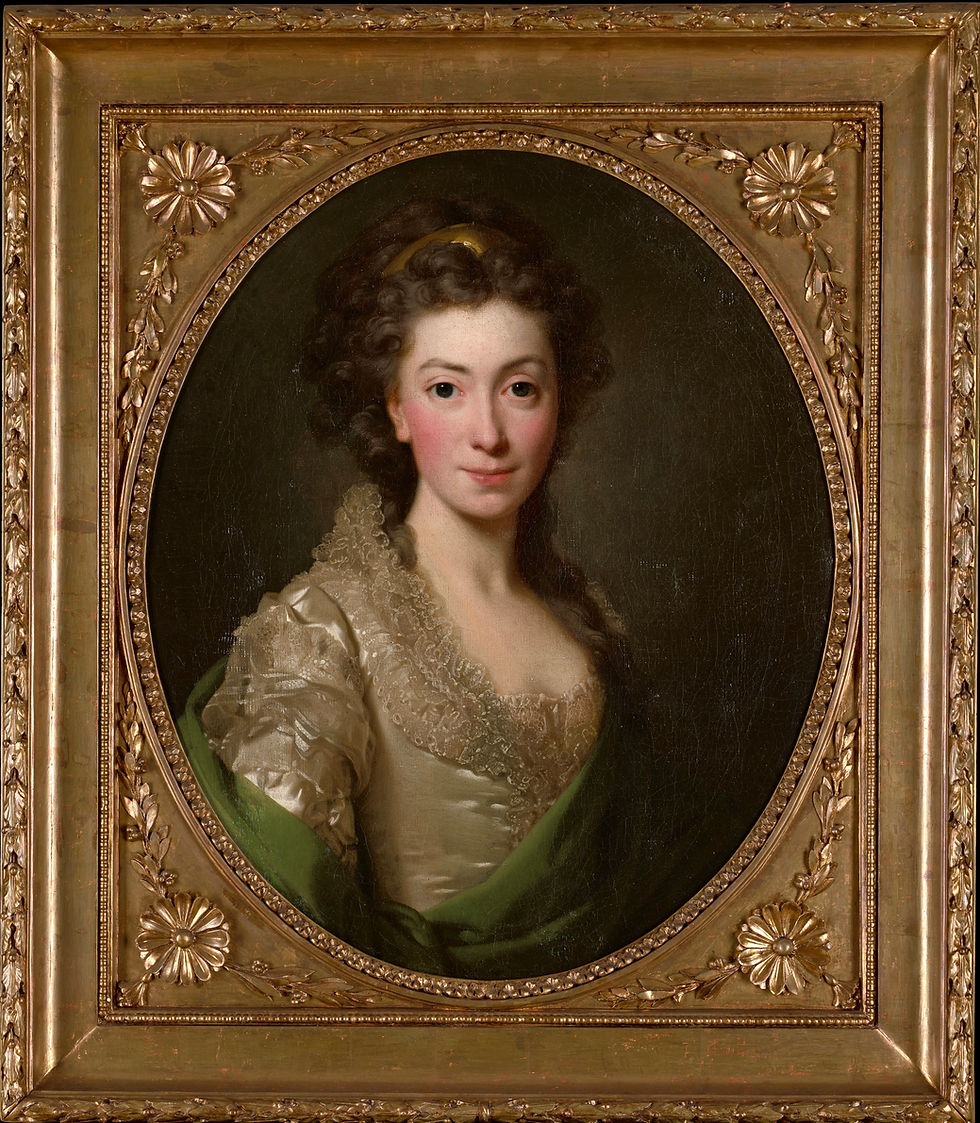
Alexander Roslin, Portrait of Izabela Czartoryska née Fleming, 1774, Museum of the Princes Czartoryski in Kraków (MNK XII-A-616). Public domain. Source: Wikimedia Commons / MNK.


Comments